East Tennessee has beautiful fall color. Then all those leaves end up on your lawn. A few leaves won't hurt anything, but a thick, wet layer left all winter can smother your grass and leave bare, dead patches by spring.
Why leaves hurt your lawn
Fescue keeps growing in the fall. It needs sunlight to store up food for winter. A heavy mat of leaves blocks the sun, holds in moisture, and can lead to mold and disease.
Option 1: Mulch them with your mower
If the layer is light, just mow over the leaves. Your mower chops them into tiny pieces that fall between the grass blades and break down into natural food for your soil. You should still be able to see grass when you're done.
Option 2: Blow or rake them up
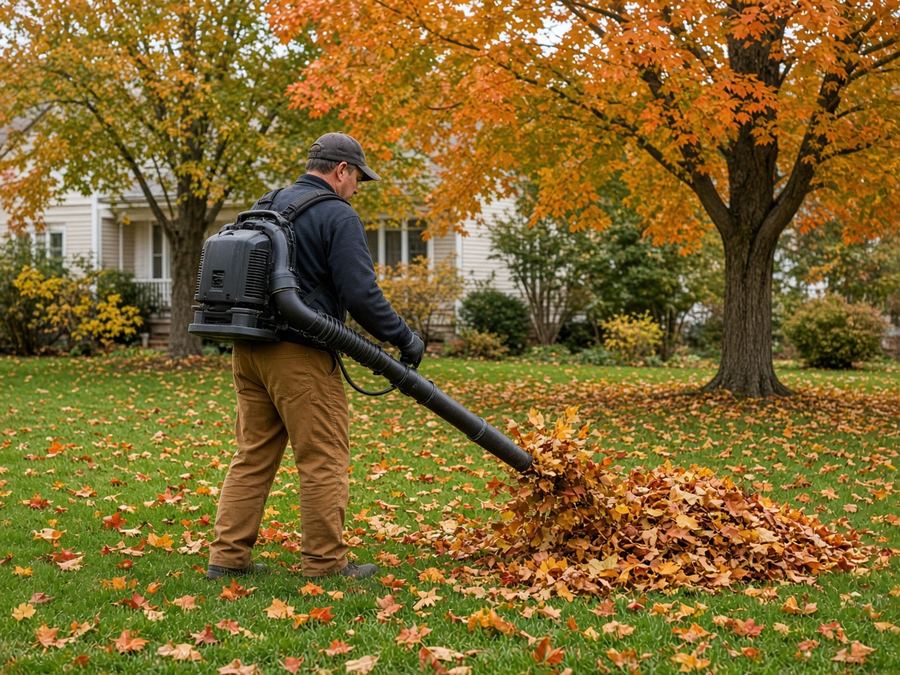
If you can't see the grass, there are too many leaves to mulch. Blow or rake them into piles, then bag them or move them to a compost pile. A leaf blower is much faster on big yards.
Don't forget these spots
- Flower beds, where wet leaves can rot plants
- Gutters and downspouts, so rain can drain
- Sidewalks and steps, where wet leaves get slippery
- Around the AC unit, so air can flow
How often to clear leaves
In late October and November, plan to clear leaves every week or two. Waiting until every leaf has fallen means one huge job and more time for damage underneath.
Let us handle it
Our fall leaf cleanup clears the lawn, beds, and corners, and we haul everything away. Use our price estimate to see what it costs for your yard size.